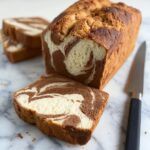
Description
This Marble Rye Bread recipe features a delightful combination of light and dark rye doughs marbled together, offering a compelling pattern and a rich flavor accentuated by caraway seeds and the subtle sweetness of honey and molasses. Perfectly soft with a slightly chewy crust, this homemade bread is an impressive addition to any meal or sandwich.
Ingredients
Scale
Light Dough
- 1 1/2 cups white rye flour
- 3 cups bread flour
- 1 3/4 teaspoons instant yeast
- 1 1/2 teaspoons salt
- 1 1/2 teaspoons caraway seeds
- 1 tablespoon honey
- 2 tablespoons butter, softened
- 1 1/4 cups water, room temperature
Dark Dough
- 1 1/2 cups white rye flour
- 3 cups bread flour
- 1 1/4 teaspoons instant yeast
- 1 1/2 teaspoons salt
- 1 1/2 teaspoons caraway seeds
- 1 tablespoon molasses
- 2 tablespoons butter, softened
- 2 tablespoons unsweetened cocoa powder
- 1 1/4 cups water, room temperature
Topping
- 1 egg white
- 1 teaspoon water
- 1 tablespoon caraway seeds
Instructions
- Prepare the Light Dough: In a large bowl or stand mixer, mix white rye flour, bread flour, instant yeast, salt, and caraway seeds. Add honey, softened butter, and 1 cup of water. Stir to form a shaggy dough, then gradually add water until the dough is soft and slightly tacky but not sticky. Knead at low speed for 5 minutes or by hand for 7-8 minutes until the dough is smooth, elastic, and passes the windowpane test.
- Prepare the Dark Dough: In a separate bowl, combine white rye flour, bread flour, instant yeast, salt, and caraway seeds. Add molasses, cocoa powder, softened butter, and 1 cup of water. Knead until soft and slightly tacky, adjusting water as needed due to cocoa powder absorption.
- First Rise: Place each dough in a lightly oiled bowl, turn once to coat, cover with plastic wrap, and let rise in a warm spot until doubled, about 1.5 hours.
- Punch Down and Rest: Punch down both doughs and transfer to lightly floured surfaces. Let rest for 10 minutes to relax the gluten.
- Divide and Roll: Divide each dough into 2 equal pieces (4 pieces total). Roll each piece into an 8×10-inch rectangle.
- Stack and Roll the Loaf: Stack the rectangles alternating light, dark, light, and dark. Gently roll the stack to adhere layers, then roll tightly from the short end into a log, pinching seams and ends closed.
- Second Rise: Place the loaf seam-side down into a greased 9×5-inch loaf pan or parchment-lined baking sheet. Cover loosely with oiled plastic wrap and let rise until nearly doubled, about 60-90 minutes, until puffy and slightly springy.
- Prepare for Baking: Preheat oven to 350°F (175°C) about 30 minutes before baking. Whisk egg white with water and brush the loaf top. Sprinkle remaining caraway seeds, then score three diagonal slashes about ½ inch deep across the loaf.
- Bake the Bread: Bake for 40 to 45 minutes until golden brown and internal temperature reaches 200°F (93°C). Tent with foil if browning too quickly.
- Cool the Bread: Remove from pan and cool on a wire rack for at least 2 hours before slicing to set crumb and preserve marbling.
Notes
- Ensure dough is soft but not sticky for best kneading results.
- The windowpane test checks gluten development—dough should stretch thin without tearing.
- Resting the dough after punch down makes rolling easier.
- Brushing with egg white adds a shiny crust and helps caraway seeds stick.
- Cooling fully before slicing prevents the bread from becoming gummy.
- Tent with foil if the crust browns prematurely to avoid burning.