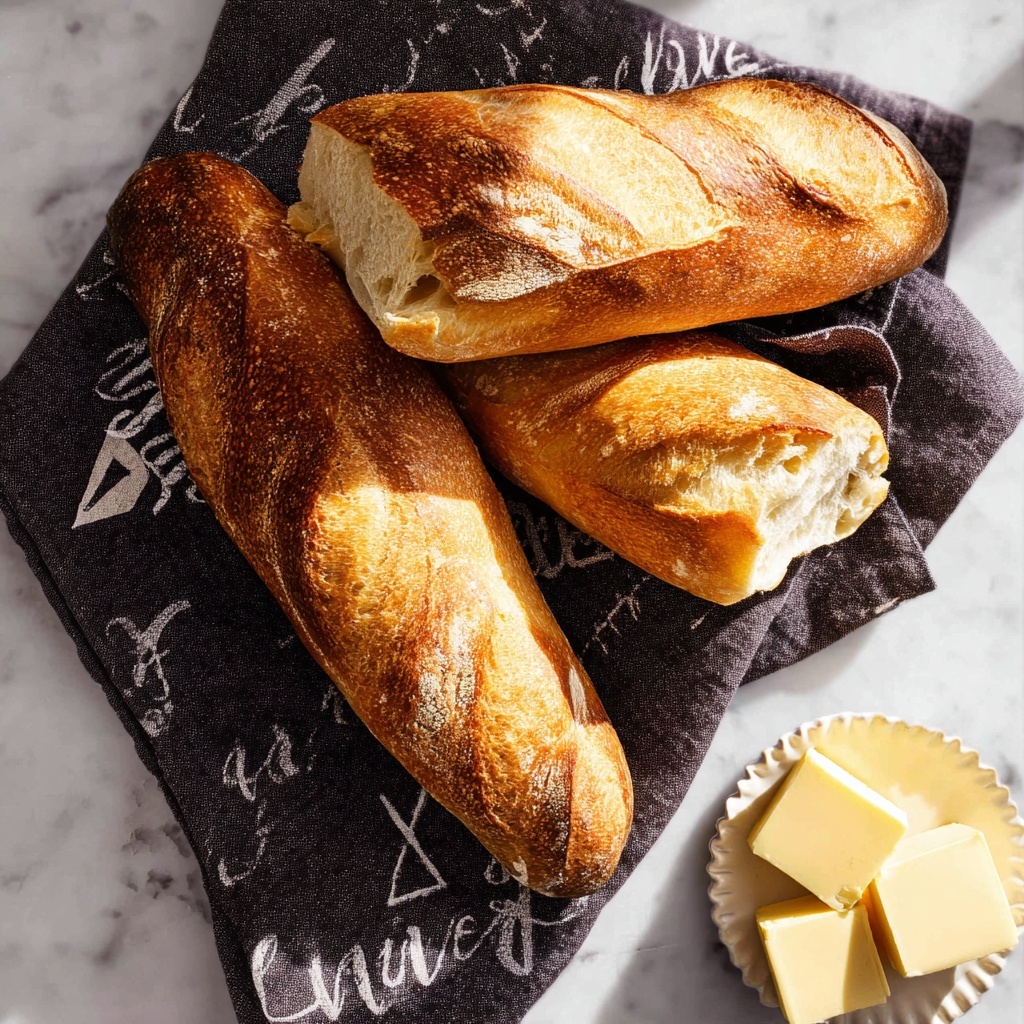
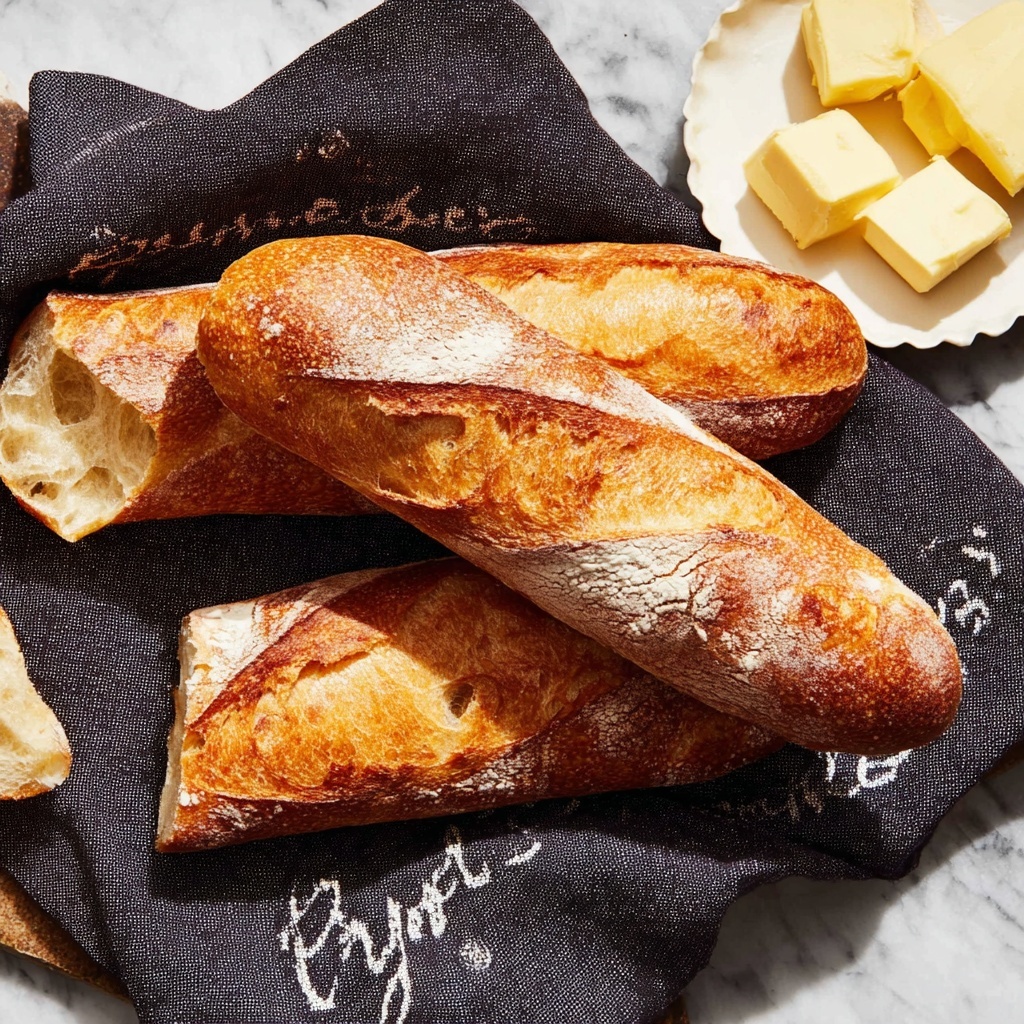
If you have ever dreamed of biting into a crusty, golden loaf with a tender, airy interior, then this French Baguette Recipe is your new best friend in the kitchen. It’s a classic that embodies everything we love about homemade bread: simplicity, tradition, and unbeatable flavor. From the crisp crackle of the crust to the subtle sweetness in the crumb, this recipe brings the heart of French baking right to your countertop, turning even a novice baker into a bread champion.
Ingredients You’ll Need
This French baguette recipe calls for just a handful of straightforward ingredients that work together magically to create that iconic crust and airy texture. Each component plays a vital role to ensure your baguette is picture-perfect and delicious.
- Bread flour (3 cups / 360 grams): Provides the perfect protein content for that classic chewy and elastic bread texture.
- Instant yeast (1½ teaspoons / 4 grams): Ensures your dough rises beautifully with minimal effort and a reliable result every time.
- Kosher salt (1¼ teaspoons / 4 grams): Enhances flavor without overpowering the delicate balance of your baguette’s taste.
- Honey (1 tablespoon / 22 grams): Adds subtle sweetness and aids in browning to develop that irresistible golden crust.
- Warm water (1 cup / 227 grams at ~110°F): Activates the yeast and helps combine the ingredients into a cohesive dough.
How to Make French Baguette Recipe
Step 1: Combine the Ingredients
Start by mixing your bread flour, instant yeast, kosher salt, honey, and warm water in a large bowl. Stir until a shaggy dough forms — this mixture is the foundation of your baguette’s wonderful texture.
Step 2: Knead Until Smooth and Elastic
Turn the dough out onto a lightly floured surface and knead for about 10 minutes by hand, or use a stand mixer fitted with a dough hook on low speed. Kneading develops the gluten, giving your baguette its signature chewy crumb and sturdy structure.
Step 3: First Rise
Place the dough in a lightly oiled container, cover it with a damp cloth, and let it rise in a warm spot. This first proofing should take around 1 to 1½ hours, until the dough has doubled in size and feels airy to the touch.
Step 4: Shape into Loaves
Gently deflate the dough and divide it into two equal pieces. Roll each piece into a long, thin baguette shape about 14 inches long—this shaping step is key to that iconic French silhouette.
Step 5: Second Rise with Proper Shaping
Place the shaped loaves on a floured baker’s linen or kitchen towel with folds between them. These folds keep the baguettes from spreading out too much as they rise again for about one hour until puffy and nearly doubled.
Step 6: Preheat Your Oven and Prepare for Baking
Preheat your oven to 475°F, placing a baking stone or steel inside if you have one. If not, an inverted baking sheet or pizza pan works fine. Don’t forget to put an empty cast iron pan on the bottom rack to create steam during baking.
Step 7: Score the Dough
Transfer your loaves onto parchment on a baking peel or the back of a baking sheet. Use a sharp knife or lame to make 4-6 diagonal cuts along the tops — these slashes let steam escape, helping your baguettes rise beautifully while baking.
Step 8: Bake with Steam
Slide the parchment and loaves onto the hot baking stone and pour a cup of water into the cast iron pan below to create steam. Close the oven quickly and bake for 15 minutes. Steam traps moisture in the oven which contributes to the crispy crust.
Step 9: Finish Baking to Golden Perfection
Remove the pan with water, rotate the baguettes for even baking, lower the temperature to 450°F, and bake for another 10-15 minutes. Your loaves should turn a deep golden brown, signaling that classic French baguette crust is ready to be enjoyed.
Step 10: Cool Before Slicing
Let your baguettes rest on a wire rack so they cool evenly and the crumb sets perfectly before slicing. This is the moment to admire your hard work before enjoying the fruits of your labor.
How to Serve French Baguette Recipe
Garnishes
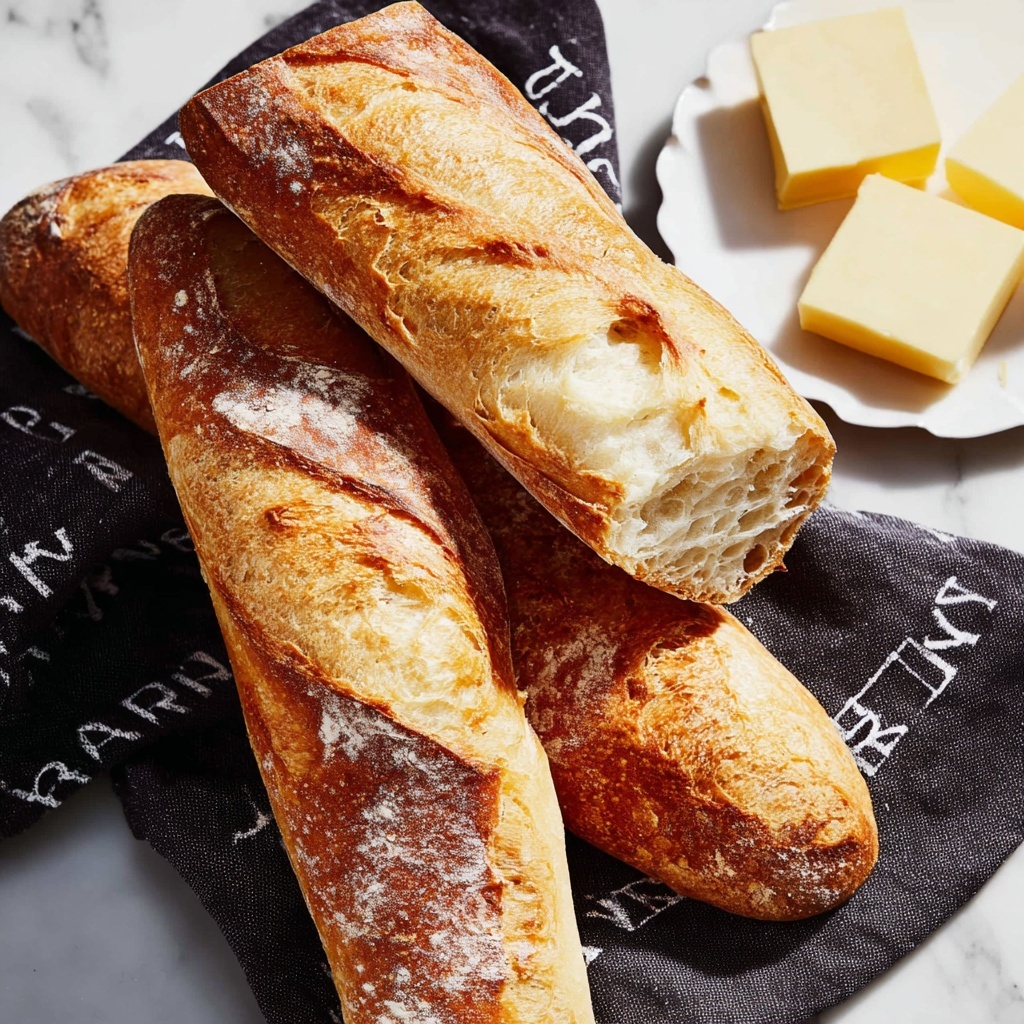
A fresh baguette pairs wonderfully with a light spread of quality butter, a drizzle of good olive oil, or a sprinkle of flaky sea salt. Herbal butters or garlic-infused oils can add a fragrant, savory twist that makes every bite heavenly.
Side Dishes
French baguettes are classic companions to soups like tomato bisque or French onion, and delicious alongside cheese boards filled with brie, camembert, or tangy blue cheese. They also make excellent bases for sandwiches or bruschetta toppings.
Creative Ways to Present
Try slicing your baguette and lightly toasting the pieces to create crostini topped with fresh tomatoes, basil, and mozzarella. Or hollow out a baguette and fill it with your favorite sandwich ingredients for an impressive picnic or party platter.
Make Ahead and Storage
Storing Leftovers
To keep your fresh-baked baguette from going stale too quickly, store it in a paper bag at room temperature. Avoid plastic bags that trap moisture and can make the crust soggy.
Freezing
If you want to enjoy your French baguette recipe later, wrap the cooled baguette tightly in plastic wrap and then foil before freezing. This method locks in freshness for up to three months without compromising texture.
Reheating
To revive your baguette’s crust, sprinkle lightly with water and warm it in a 350°F oven for 5-10 minutes. This step refreshes the texture and flavor, making it taste almost as good as fresh-baked.
FAQs
Can I use all-purpose flour instead of bread flour?
While you can use all-purpose flour in a pinch, bread flour’s higher protein content is essential for developing the strong gluten network that gives baguettes their chewy texture and structure, so bread flour is recommended for best results.
Why do I need to add water during baking?
Adding water creates steam in the oven, which keeps the dough surface moist during the initial baking phase. This helps develop a crisp, crackling crust while allowing the inside to remain soft and airy.
How long can I let the dough rise?
The dough should ideally double in size during both rises, which usually takes about 1 to 1½ hours, but slow, longer rises in a cooler environment can also develop better flavor and texture.
Can I make baguettes without a baking stone or steel?
Absolutely! An inverted baking sheet or pizza pan will work to provide a hot surface for baking, though a stone or steel is preferable for optimal heat retention and crust development.
What is the best way to slice a baguette?
Use a serrated bread knife and a gentle sawing motion to avoid crushing the loaf. Slicing just before serving helps keep the bread fresh and maintains that delightful crust crunch.
Final Thoughts
This French Baguette Recipe is a delightful journey into classic baking that anyone can master with a bit of patience and love. Sharing a warm homemade baguette with friends or family is pure joy, and the satisfaction of pulling fresh loaves from your own oven is truly unmatched. So grab your flour and yeast, and dive into creating a little slice of France at home!
Print
French Baguette Recipe
- Prep Time: 30 minutes
- Cook Time: 30 minutes
- Total Time: 2 hours 30 minutes
- Yield: 8-8 pieces (2 baguettes)
- Category: Bread
- Method: Baking
- Cuisine: French
Description
This classic French Baguette recipe guides you through making authentic, crusty baguettes with a chewy interior from scratch. Using simple ingredients like bread flour, yeast, salt, honey, and warm water, this method involves traditional kneading, two rises, and baking on a hot stone to achieve the perfect artisan loaf with a golden crust and tender crumb.
Ingredients
Dry Ingredients
- 3 cups bread flour (360 grams, plus more for dusting)
- 1½ teaspoons instant yeast (4 grams)
- 1¼ teaspoons kosher salt (4 grams)
Wet Ingredients
- 1 tablespoon honey (22 grams)
- 1 cup warm water (227 grams, about 110°F)
Instructions
- Mix Ingredients: In a large mixing bowl, combine the bread flour, instant yeast, kosher salt, honey, and warm water. Stir until a shaggy dough forms, ensuring all ingredients are evenly incorporated.
- Knead the Dough: Turn the dough out onto a lightly floured surface and knead for about 10 minutes until smooth and elastic. Alternatively, use a stand mixer with a dough hook on low speed for 10 minutes to achieve the same texture.
- First Rise: Place the kneaded dough in a lightly oiled container, cover with a damp cloth, and let it rise in a warm area until doubled in size, about 1 to 1½ hours.
- Shape the Loaves: Gently deflate the dough and divide it into two equal pieces (approximately 308 grams each). Roll each piece into a long, thin baguette shape about 14 inches in length.
- Prepare for Second Rise: Transfer the shaped baguettes onto a baker’s linen or a floured kitchen towel, folding the cloth between loaves to maintain their shape.
- Second Rise: Cover with the towel and let the dough rise again for about 1 hour, or until puffy and nearly doubled.
- Preheat Oven: Preheat your oven to 475°F (246°C) with a baking stone or steel placed inside. If unavailable, use an inverted baking sheet or pizza pan instead. Place an empty cast iron pan on the bottom rack to create steam later.
- Transfer Loaves: Carefully move the loaves onto a piece of parchment paper on a baking peel or the back of a baking sheet for easy transfer.
- Score the Baguettes: Using a lame or a sharp knife, make 4-6 diagonal slashes on the tops of each loaf to allow proper expansion during baking.
- Bake with Steam: Slide the parchment paper with loaves onto the preheated baking stone. Pour a cup of water into the hot cast iron pan below to generate steam and immediately close the oven door. Bake for 15 minutes.
- Finish Baking: Remove the pan with water carefully, rotate the baguettes for even color, reduce the oven temperature to 450°F (232°C), and bake for an additional 10-15 minutes until the crust is deeply golden brown.
- Cool: Transfer the baguettes to a wire rack and allow them to cool completely before slicing to preserve texture and flavor.
Notes
- Using bread flour gives the baguettes better gluten development and a chewier crumb.
- Creating steam in the oven is essential for developing a crisp crust.
- Allow the bread to cool fully to avoid gummy texture.
- The shaped baguettes can be frozen before the second rise for future baking.
- If you don’t have a baking stone or steel, an inverted baking sheet works as a good alternative.