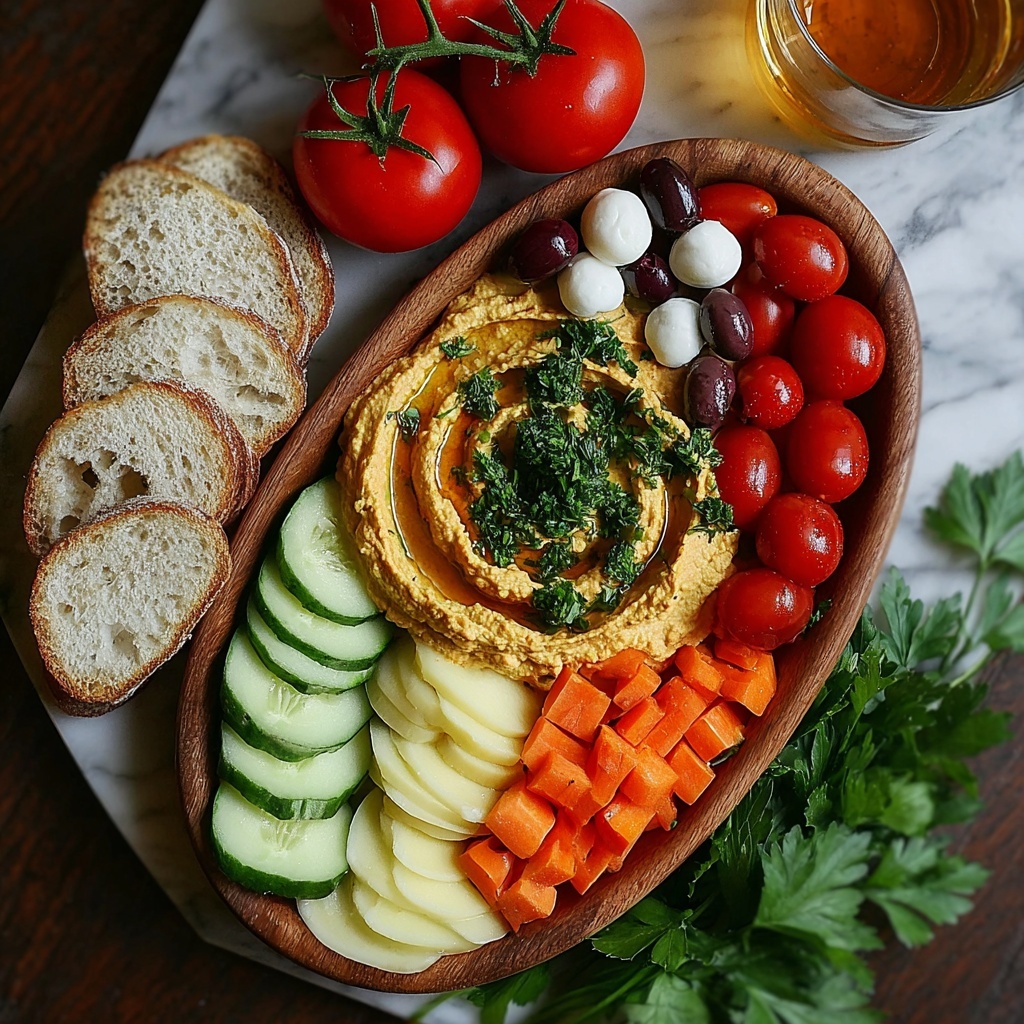
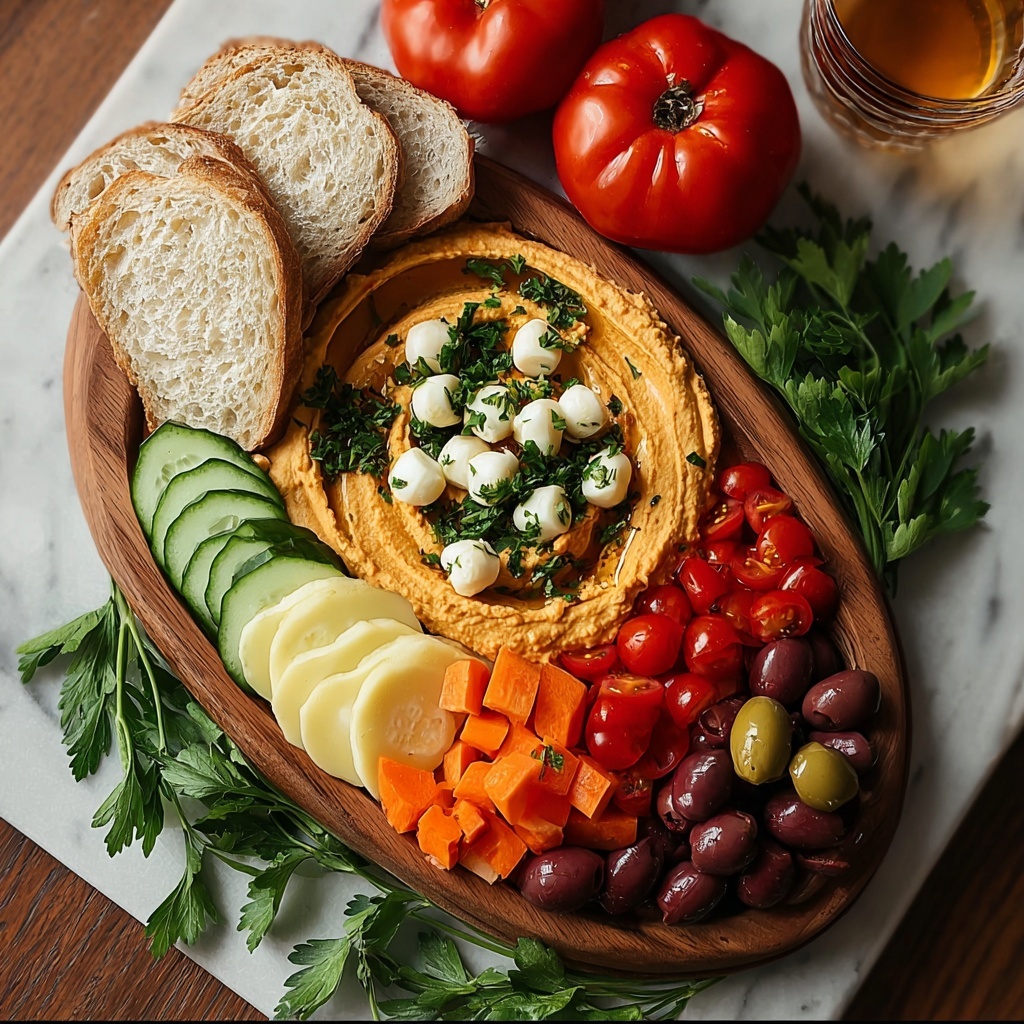
If you’re looking for a dip that bursts with flavor, texture, and color, this Loaded Hummus with Fresh Vegetables and Feta Recipe is an absolute showstopper. Creamy, tangy, and beautifully vibrant, this hummus takes the classic Middle Eastern favorite to new heights by layering in fresh veggies, salty feta, crunchy pine nuts, and a smoky paprika finish. It’s perfect for any occasion, from casual snacking to impressing guests at a party, and every spoonful delivers a delightful mix of rich, fresh, and savory sensations you’ll want to make again and again.
Ingredients You’ll Need
The beauty of this Loaded Hummus with Fresh Vegetables and Feta Recipe lies in its simplicity and how each ingredient plays a crucial role. From creamy tahini to zesty lemon juice and fresh garden veggies, each item combines to create a dish that’s colorful, flavorful, and totally satisfying.
- Chickpeas: The creamy base that makes hummus irresistibly smooth and hearty.
- Tahini: Adds a nutty richness with every bite.
- Fresh lemon juice: Brightens the hummus with tangy freshness.
- Extra virgin olive oil: Enhances creaminess and adds a fruity depth.
- Garlic: Provides a punch of savory heat to balance the flavors.
- Ground cumin: Brings warm, earthy notes that ground the dish.
- Salt: Essential for bringing out all the flavors harmoniously.
- Water: Used to adjust the consistency to your liking.
- Diced cucumbers: Offers a fresh crunch and cooling contrast.
- Cherry tomatoes: Bursts of juicy sweetness with every bite.
- Olives: Salty and briny elements to deepen flavor complexity.
- Feta cheese: Creamy and tangy, it adds a salty richness that elevates the dish.
- Pine nuts: Toasted for a perfect nutty crunch.
- Fresh parsley: Adds a bright, herbal finish to the toppings.
- Smoked paprika: A smoky, vibrant seasoning that ties everything together beautifully.
How to Make Loaded Hummus with Fresh Vegetables and Feta Recipe
Step 1: Blend the Hummus Base
Start by combining the chickpeas, tahini, lemon juice, olive oil, garlic, ground cumin, and salt in a food processor. This mixture forms the creamy foundation that will carry all the toppings beautifully.
Step 2: Achieve the Perfect Texture
Process everything until the hummus is silky smooth. If the blend feels too thick, gently add water, one tablespoon at a time, until you reach the creamy texture you love.
Step 3: Taste and Adjust
Give your hummus a taste and tweak it if needed—maybe a touch more salt or an extra splash of lemon juice for brightness. This step ensures your dish reflects your personal flavor preferences perfectly.
Step 4: Plate and Create a Center Well
Transfer your luscious hummus to a shallow serving bowl or plate. Using the back of a spoon, create a little well in the center—this is where your olive oil will pool and your toppings will gather, making each bite a tasty experience.
Step 5: Drizzle and Garnish
Drizzle a generous amount of extra virgin olive oil into the well and over the hummus surface. Then, sprinkle your fresh toppings: diced cucumbers, cherry tomatoes, olives, crumbled feta, toasted pine nuts, and parsley. Finally, add a dash of smoked paprika to finish it off with vibrant color and smoky nuance.
Step 6: Ready to Serve
Your loaded masterpiece is ready to share and enjoy. Pair it with warm pita, crunchy chips, or fresh veggies for an irresistible appetizer or snack.
How to Serve Loaded Hummus with Fresh Vegetables and Feta Recipe
Garnishes
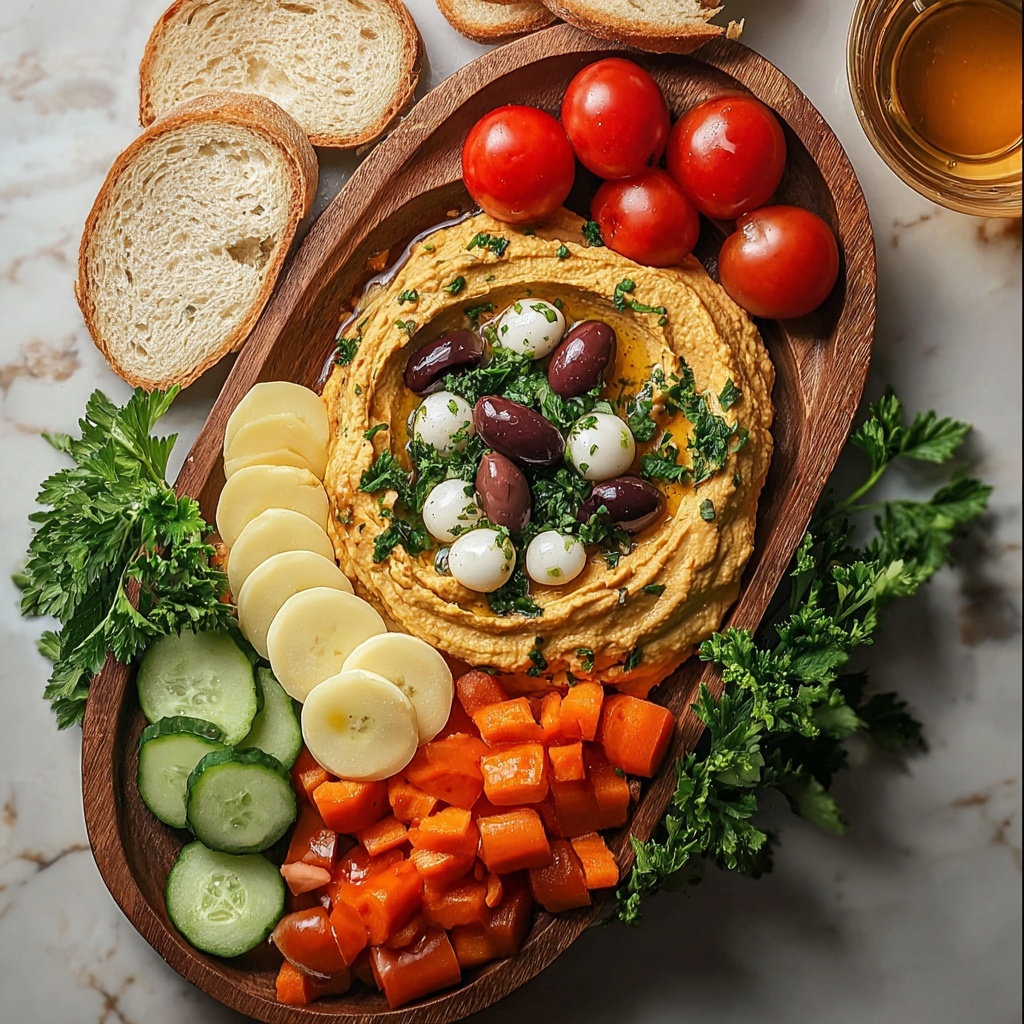
Choosing the right garnishes can make the dish even more special. The combination of crisp cucumbers, juicy cherry tomatoes, salty olives, creamy feta, and toasted pine nuts adds texture contrasts and layers of flavor that make the hummus come alive with every bite.
Side Dishes
This Loaded Hummus with Fresh Vegetables and Feta Recipe pairs perfectly with soft pita bread, crunchy pita chips, or a vibrant veggie platter featuring carrots, bell peppers, and celery sticks. Adding warm flatbread or fresh crudités rounds out the meal or snack beautifully.
Creative Ways to Present
Feel free to get creative: serve your hummus on a rustic wooden board surrounded by toppings in little bowls for a DIY dip spread, or layer it in a shallow dish with toppings artistically arranged on top. Another fun idea is to fill small cups with hummus and veggie sticks for easy, portable finger food.
Make Ahead and Storage
Storing Leftovers
After enjoying your hummus, store any leftovers in an airtight container in the refrigerator. It will stay fresh for up to 4 days. Keep toppings separate for best texture the next day.
Freezing
You can freeze plain hummus (without veggies or feta) in a freezer-safe container for up to 3 months. Thaw overnight in the fridge and stir well before serving. Add toppings fresh after thawing for the best flavor.
Reheating
Hummus is typically served cold or room temperature, so reheating is usually unnecessary. However, if you prefer it slightly warmed, microwave gently in short bursts, stirring frequently to avoid overheating or drying out the dip.
FAQs
Can I use fresh chickpeas instead of canned?
Absolutely! Freshly cooked chickpeas bring a lovely texture and flavor, but they do require longer prep time. Use about 1 and a half cups of cooked chickpeas to replace the 15-ounce canned can.
Is tahini necessary in this recipe?
Tahini adds a distinctive nutty richness that’s a hallmark of classic hummus. While you can omit it in a pinch, the flavor depth won’t be quite the same.
Can I make this recipe vegan?
Yes! Just skip the feta cheese or substitute it with a vegan cheese alternative to keep the dish plant-based and delicious.
How do I make the toppings last longer?
Prepare toppings fresh for best texture and flavor. However, veggies like cucumbers and tomatoes can be chopped a few hours ahead and stored separately in the fridge in airtight containers.
What else can I add to customize my loaded hummus?
Feel free to experiment with your favorite toppings like roasted red peppers, sun-dried tomatoes, pine nuts, or even a spicy sprinkle of cayenne pepper to make this Loaded Hummus with Fresh Vegetables and Feta Recipe your own signature dish.
Final Thoughts
This Loaded Hummus with Fresh Vegetables and Feta Recipe isn’t just a dip—it’s a vibrant celebration of flavors and textures that’s incredibly easy to whip up and share. Whether you’re entertaining or craving a wholesome snack, this recipe never fails to impress and delight. Give it a try, and watch it quickly become a handy favorite in your culinary rotation!
Print
Loaded Hummus with Fresh Vegetables and Feta Recipe
- Prep Time: 0h 10m
- Cook Time: 0h 0m
- Total Time: 0h 10m
- Yield: 6 servings
- Category: Appetizer
- Method: Blending
- Cuisine: Middle Eastern
- Diet: Vegetarian
Description
Loaded Hummus is a creamy and flavorful Middle Eastern dip made from smooth blended chickpeas, tahini, lemon juice, and garlic, topped with fresh vegetables, olives, feta cheese, toasted pine nuts, and parsley. This easy no-cook recipe is perfect as an appetizer or snack, offering a delicious combination of textures and vibrant flavors.
Ingredients
Hummus Base
- 1 can (15 oz) chickpeas, drained and rinsed
- 1/4 cup tahini
- 3 tablespoons fresh lemon juice
- 2 tablespoons extra virgin olive oil, plus more for drizzling
- 2 cloves garlic, minced
- 1/2 teaspoon ground cumin
- Salt to taste
- 2 to 4 tablespoons water
Toppings
- Diced cucumbers
- Cherry tomatoes
- Olives
- Feta cheese, crumbled
- Toasted pine nuts
- Fresh parsley, chopped
- Smoked paprika, for sprinkling
Instructions
- Combine Ingredients: In a food processor, add the drained chickpeas, tahini, lemon juice, olive oil, minced garlic, ground cumin, and salt. This will form the base of your hummus.
- Blend Until Smooth: Process all ingredients together until the mixture is smooth and creamy. If the mixture feels too thick, add water gradually, one tablespoon at a time, and continue blending until you reach the desired consistency.
- Adjust Seasoning: Taste the hummus and adjust the seasoning if needed, adding more salt or lemon juice according to your preference for a balanced flavor.
- Transfer to Serving Dish: Spoon the hummus into a serving bowl. Use the back of a spoon to create a well or shallow indentation in the center.
- Drizzle Olive Oil: Pour a little extra virgin olive oil into the well and lightly over the surface of the hummus to add richness and shine.
- Add Toppings: Arrange your choice of toppings evenly on the hummus—diced cucumbers, cherry tomatoes, olives, crumbled feta cheese, toasted pine nuts, and freshly chopped parsley all add wonderful layers of flavor and texture.
- Sprinkle Smoked Paprika: Finish by lightly sprinkling smoked paprika over the top to give a vibrant pop of color and a subtle smoky taste.
- Serve: Serve the loaded hummus immediately alongside pita chips, warm bread, or fresh vegetables for dipping.
Notes
- You can customize the toppings according to your preference or what you have available.
- If you prefer a thicker hummus, use less water; for a creamier consistency, add more.
- Toasting the pine nuts enhances their flavor and crunch—toast them lightly in a dry skillet over medium heat until golden.
- For a vegan option, omit the feta cheese or use a vegan cheese alternative.
- Hummus can be stored in an airtight container in the refrigerator for up to 3 days.